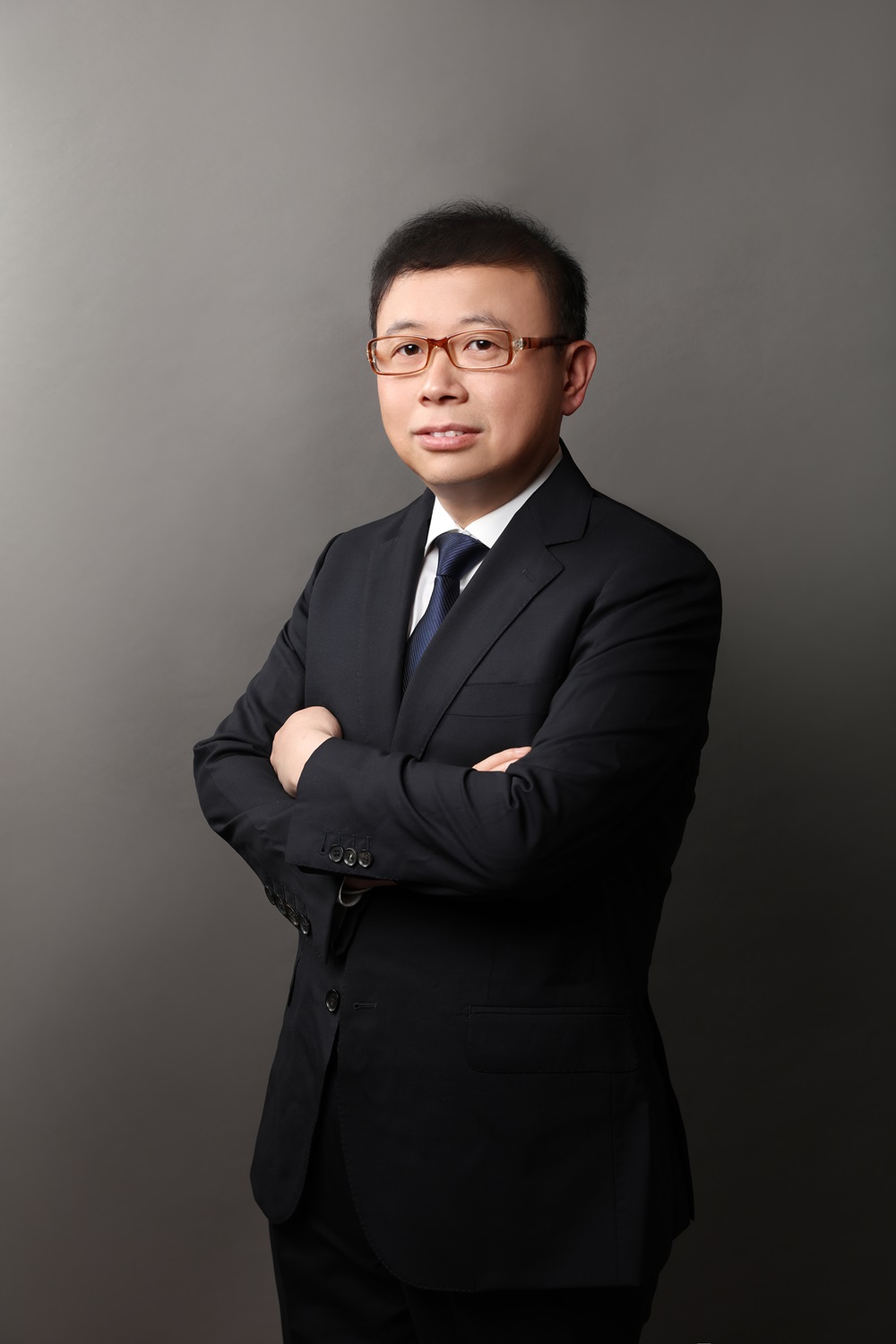
2022/12 – 至今, 上海理工大学 健康科学与工程学院, 讲师(硕导)
2016/09 – 2022/11, 华为技术有限公司上海研究所, 高级算法工程师
2015/09 – 2016/08, 清华大学 计算机系, 国内访问学者
2013/07 – 2016/08, 上海电力大学 计算机科学与技术学院, 讲师(硕导)
2022/12 – 至今, 上海理工大学 健康科学与工程学院, 讲师(硕导)
2016/09 – 2022/11, 华为技术有限公司上海研究所, 高级算法工程师
2015/09 – 2016/08, 清华大学 计算机系, 国内访问学者
2013/07 – 2016/08, 上海电力大学 计算机科学与技术学院, 讲师(硕导)
2008/09 – 2013/06, 上海交通大学, 模式识别与智能系统, 博士
2010/04 – 2011/04, 澳大利亚悉尼科技大学, 量子计算与智能系统中心, 联合培养博士
2005/09 – 2008/06, 江南大学, 计算机应用技术, 硕士
2001/09 – 2005/06, 江南大学, 计算机科学与技术, 本科
1. 医学人工智能
2. 生物信息学
【主持】
[1] 国家自然科学基金青年项目: 面向社会媒体数据子空间聚类算法研究(61403247), 2015/01 – 2017/12.
[2] 上海市青年科技英才扬帆计划:(14YF1411000), 2014/07 – 2017/06.
[3] 上海市教委科研创新项目:(14YZ131), 2014/01 – 2016/12.
【授权专利】
[1] 预测车辆的目的地的方法和装置,实用新型,中国,CN201911051464.4,2021-05-04
[2] 一种交通流量分析方法和装置 ,实用新型,中国,CN201911034776.4,2021-05-04
[3] 识别车辆的营运行为的方法、装置及计算设备,实用新型,中国,CN201910814296.3,2021-03-05
[4] 一种确定交通流量的方法、装置及设备,实用新型,中国,CN201910689176.5,2021-02-02
[5] 一种分布式能源控制系统及方法,实用新型,中国,CN202211339266.X,2023-04-04
[6] 发电功率预测方法、负荷预测方法及模型训练方法,中国,CN202210885608.1,2022-10-11
[7] 综合能源系统及其优化控制方法,实用新型,中国,CN202111568613.1,2022-05-10
[8] 基于深度学习的印版网点图像检测和分割方法及装置,实用新型,中国,CN202310109402.4,2023-03-28
【代表性论文】
[1] Zhu, Lin, Yi Fang, Shuting Liu, Hong-Bin Shen, Wesley De Neve, and Xiaoyong Pan. ToxDL 2.0: Protein toxicity prediction using a pretrained language model and graph neural networks. Computational and Structural Biotechnology Journal 27 (2025): 1538-1549.
[2] Liu, Xiaojian, Weimin Zhu, Xiaohan Ding, Yi Fang, Shengfan Wang, Lin Zhu, Hong-Bin Shen, and Xiaoyong Pan. Base-resolution binding profile prediction of proteins on RNAs with deep learning. Nucleic Acids Research 53, no. 14 (2025): gkaf748.
[3] He, Liangwen, Zhaohong Deng, Fuping Hu, Zhongyu Wang, Yun Zuo, Lin Zhu, Haoran Chen et al. DMMAFS: Protein Function Prediction Based on Multi-Modal Multi-Attention Fusion Features. IEEE Transactions on Computational Biology and Bioinformatics (2025).
[4] Tu, Enmei, Yaqian Zhang, Lin Zhu, Jie Yang, and Nikola Kasabov. A graph-based semi-supervised k nearest-neighbor method for nonlinear manifold distributed data classification. Information Sciences 367 (2016): 673-688.
[5] Yang, Yindong, and Lin Zhu. Refine Item-Based Collaborative Filtering Algorithms with Skew Amplification. Journal of Information Science & Engineering 31, no. 6 (2015).
[6] Zhu, Lin, Longbing Cao, Jie Yang, and Jingsheng Lei. Evolving soft subspace clustering. Applied Soft Computing 14 (2014): 210-228.
[7] Pan, Xiaoyong, Lin Zhu, Yong-Xian Fan, and Junchi Yan. Predicting protein–RNA interaction amino acids using random forest based on submodularity subset selection. Computational biology and chemistry 53 (2014): 324-330.
[8] Zhu, Lin, Jie Yang, Jiang-Ning Song, Kuo-Chen Chou, and Hong-Bin Shen. Improving the accuracy of predicting disulfide connectivity by feature selection. Journal of computational chemistry 31, no. 7 (2010): 1478-1485.
[9] Zhu, Lin, Jie Yang, and Hong-Bin Shen. Multi label learning for prediction of human protein subcellular localizations. The protein journal 28, no. 9 (2009): 384-390.
[10] Zhu, Lin, Fu-Lai Chung, and Shitong Wang. Generalized fuzzy c-means clustering algorithm with improved fuzzy partitions. IEEE Transactions on Systems, Man, and Cybernetics, Part B (Cybernetics) 39, no. 3 (2009): 578-591.

地址:上海市军工路334号
电话:021-55270818
版权所有© 上海理工大学健康科学与工程学院
地址:上海市军工路334号电话:021-55270818